Our Research
Engineering Cell- and Biomaterial-Based Strategies for Tissue Regeneration

Spheroid-based
cell transplantation therapy
建立三維幹細胞球體以進行細胞治療
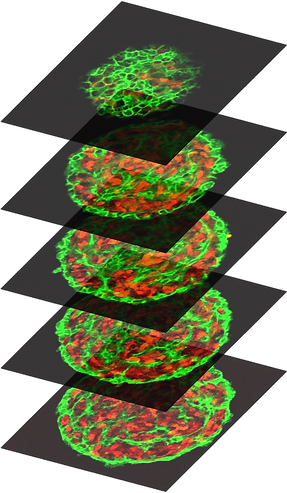
Stem cell therapy offers significant potential for regenerative medicine, yet conventional cell transplantation is often limited by poor cell survival and low engraftment efficiency. To overcome these challenges, we engineer stem cells into three-dimensional (3D) spheroids prior to transplantation.
Our research demonstrates that 3D spheroid assembly enhances stem cell survival, paracrine activity, and regenerative capacity compared with conventional single-cell delivery. Using multiple disease and injury models, we investigate how spheroid-based cell therapy promotes tissue repair and functional recovery in conditions including ischemic stroke, peripheral nerve injury, kidney injury, tendon rupture, type I diabetes, and corneal damage.
-
Stem Cell Res. Ther. 16, 172 (2025).
-
J. Tissue Eng. 16, 20417314251363300 (2025).
-
Bioeng. Transl. Med. 9, e10635 (2024).
-
Am. J. Sports Med. 52, 106–422 (2024).
-
Bioeng. Transl. Medicine 6, e10212 (2021).
-
Cells 10, 2747 (2021).
-
Biomaterials 272, 120765 (2021).
-
Frontiers Cell Dev. Biology 8, 604946 (2020).
-
Frontiers Cell Dev. Biology 8, 327 (2020).
-
Adv. Biosyst. 4, 1900254 (2020).
Cell Spheroid-derived dECM
開發三維幹細胞球體衍生基質
以促進組織再生
We engineer stem cells into three-dimensional (3D) spheroids and subsequently generate decellularized extracellular matrices (3D dECM) from these constructs. These bioactive matrices retain key extracellular and stem cell-derived components, enabling them to function as both structural scaffolds and regenerative microenvironments for tissue repair.
-
Biomaterials 324, 123530 (2026).
-
Biomaterials 321, 123332 (2025).
-
Biomaterials 315, 122941 (2025).
-
Adv. Healthc. Mater. 10, 2100024 (2021).


Functional Biomaterials for Regenerative Medicine
功能性生醫材料於再生醫學之應用

Tissue injury is often associated with ischemia, inflammation, oxidative stress, and nutrient deprivation, which collectively impair tissue repair and cell survival. To address these challenges, we engineer polymer-based biomaterials capable of controlled release of oxygen, glucose, and anti-inflammatory factors. By modulating the local microenvironment, these systems enhance regenerative processes and improve the survival and therapeutic efficacy of endogenous and transplanted cells.
-
Adv. Healthc. Mater. 14, e2401724 (2025).
-
Int. J. Mol. Sci. 23, 6322 (2022).
-
Mater. Sci. Eng. C 120, 111753 (2021).
-
Frontiers Bioeng. Biotechnology 8, 511 (2020).